Summary: This article outlines the transition from legacy supply chain software (“systems of record”) to “systems of agency,” which use AI to autonomously resolve disruptions and optimize operations rather than just logging them. For a logistics manager, this article is a strategic bridge between the hype of AI and actual operational ROI. It moves past generic AI claims to address the specific friction points of the Southeast Asian market—such as archipelagic multi-modal transit, cold chain thermal failure, and geopolitical energy shocks—providing a roadmap for deployment that avoids common failure traps.
The global logistics landscape is moving from static, deterministic automation toward goal-directed agentic artificial intelligence1. Traditional enterprise software in logistics—predominantly Transportation Management Systems (TMS), Enterprise Resource Planning (ERP), and Warehouse Management Systems (WMS)—has historically functioned as “systems of record”2. These legacy systems log operational events and execute rigid rules, leaving human logistics planners to manually diagnose exceptions, evaluate trade-offs, and negotiate carrier adjustments2. Agentic AI breaks this paradigm by introducing “systems of agency”2. Built on transformer architectures and advanced reasoning loops, such as Reasoning and Acting (ReAct) and Chain-of-Thought (CoT), agentic systems do not merely automate pre-defined tasks4. Instead, they pursue open-ended operational goals, evaluate probabilistic outcomes, dynamically re-route assets, and negotiate across supply chain nodes without requiring constant human intervention2. The global market for agentic AI in supply chain and logistics reflects this transition, projected to expand from $9.2 billion in 2025 to $46.15 billion by 2035, representing a compound annual growth rate (CAGR) of 17.5%1. Across the broader enterprise software landscape, the market value of agentic platforms is forecasted to reach $236 billion by 20346.
Evaluating agentic AI using conventional return-on-investment (ROI) metrics—such as seat-license reductions or simple labor-hour offsets—results in a fundamental miscalculation of its enterprise impact5. Traditional Robotic Process Automation (RPA) reduced costs by executing high-volume, linear tasks faster than human workers, but broke when encountering unstructured data or operational exceptions5. Agentic AI, conversely, acts as an execution engine that expands capacity, accelerates cycle times, and enhances operational elasticity5.
To evaluate the economic impact of agentic logistics, enterprise software frameworks categorize analytics maturity across five distinct evolutionary tiers5:
- Level 1 (Descriptive): “What happened?” (Static operational reporting; cycle times measured in days to weeks)5.
- Level 2 (Diagnostic): “Why did it happen?” (Root cause analysis; cycle times measured in days)5.
- Level 3 (Predictive): “What will happen?” (Forecasting models; cycle times measured in hours to days)5.
- Level 4 (Prescriptive): “What should we do?” (Recommendation engines; response times measured in hours)5.
- Level 5 (Agentic): “Handle this.” (Autonomous execution and coordination; response times measured in minutes)5.
While Level 4 systems leave human operators as the primary execution bottleneck, Level 5 agentic frameworks collapse decision and execution loops, driving 40% to 60% reductions in process cycle times5. Research from Deloitte demonstrates that properly architected AI agents improve decision accuracy by 15% to 25% annually as they continuously learn from outcome patterns, enabling organizations to achieve 3x to 5x revenue growth while operational expenses increase by only 30% to 60%8.
According to McKinsey & Company, agentic AI transforms business processes across five core dimensions: accelerating task execution by eliminating handoff delays, introducing real-time adaptability to reshuffle task sequences before bottlenecks cascade, personalizing workflows, providing operational elasticity to scale digital execution capacity during peak demand, and enhancing systemic resilience7. Consequently, McKinsey projects that 25% of enterprise workflows will be automated by agentic AI by 2028, while Gartner predicts that 50% of enterprises will deploy autonomous decision systems by 20275.
| Metric Category | Traditional Automation (RPA / Legacy TMS) | Agentic AI Supply Chain Architecture | Enterprise Impact Benchmark |
| Primary Economic Focus | Direct Labor Cost Reduction (FTE offsets)5 | Outcome Velocity & Operational Elasticity5 | Average 171% ROI globally (192% in US)6 |
| Decision Logic | Deterministic (“If-This-Then-That”)5 | Probabilistic Reasoning & Adaptive Learning4 | 44% reduction in processing error rates6 |
| Exception Handling | Escalates all deviations to human operators5 | Autonomous resolution with governed threshold fallback5 | 50% reduction in manual planner workload3 |
| Payback Period | 18–24 months standard software amortization | Rapid cost recovery post-deployment | Median 8.3-month payback period6 |
| Functional Scope | Single-system task execution (e.g., data entry)5 | Cross-platform, multi-agent orchestration3 | 3.1x throughput in document processing6 |
| Macro Financial Gain | Marginal operational efficiency gains | Supply chain functional cost reduction3 | 3% to 4% reduction in total functional costs3 |
At the global macro level, deployments of agentic and generative AI can reduce functional supply chain costs by 3% to 4%, translating to $290 billion to $550 billion in savings across global industries3. Approximately 40% of enterprise supply chain organizations actively invest in agentic capabilities to realize these efficiencies3. At the enterprise level, organizations running production-grade AI agents report a median annual cost savings of $340,000 per deployed agent, alongside a median annual revenue uplift of $420,000 for customer-facing logistics agents6. Furthermore, agentic systems cut expedited shipping expenses by 3% to 5% of total logistics spend through early disruption detection and proactive inventory rebalancing3.
Despite these high returns, enterprise adoption exhibits a pronounced bifurcated distribution. While 79% of enterprise organizations report piloting AI agents in some form, only 11% have deployed autonomous agents into production environments6. A substantial 68% remain stalled in the pilot-to-production gap6. Industry data reveals that 88% of initial agentic AI projects fail to reach production, and approximately 40% of agentic implementations are projected to be cancelled due to governance failures, integration friction, or uncalibrated risk controls6.
Enterprise implementations follow a phased maturity trajectory5. During the initial baseline phase, process friction and failure rates are quantified6. Within the first 30 days, during technical stabilization, systems exhibit a negative ROI due to upfront infrastructure investments—median enterprise platform setup costs average $280,000—and initial model tuning6. Value realization typically occurs around Day 90, where speed gains offset operational spend5. By Day 180, compounding efficiency takes hold as agents process over 80% of routine supply chain exceptions autonomously, lowering human intervention (“rescue”) rates from initial baselines of nearly 38% down to under 14%5.
| Implementation Phase | Operational Focus & Objectives | Economic ROI State | Human Rescue Rate Baseline |
| Day 0 (Baseline) | Measure process friction, task cycle times, and error rates6. | Neutral / Pre-investment6 | 100% (Fully manual exception handling)6 |
| Day 30 (Stability) | Technical integration, API connections, and logic validation6. | Negative ROI (Setup & TCI costs)6 | 38% (High escalation to human leads)6 |
| Day 90 (Value Realization) | Breakeven point; tangible speed gains and direct cost offsets5. | Breakeven to Positive ROI6 | 20–25% (Routine exceptions automated)5 |
| Day 180 (Scale) | Compounding phase; agent handles 80%+ of volume autonomously5. | Highly Positive ROI (171% avg)6 | 14% (Escalation only for edge cases)5 |
Navigating Southeast Asian Logistics: Archipelago Complexities and Macro Shocks
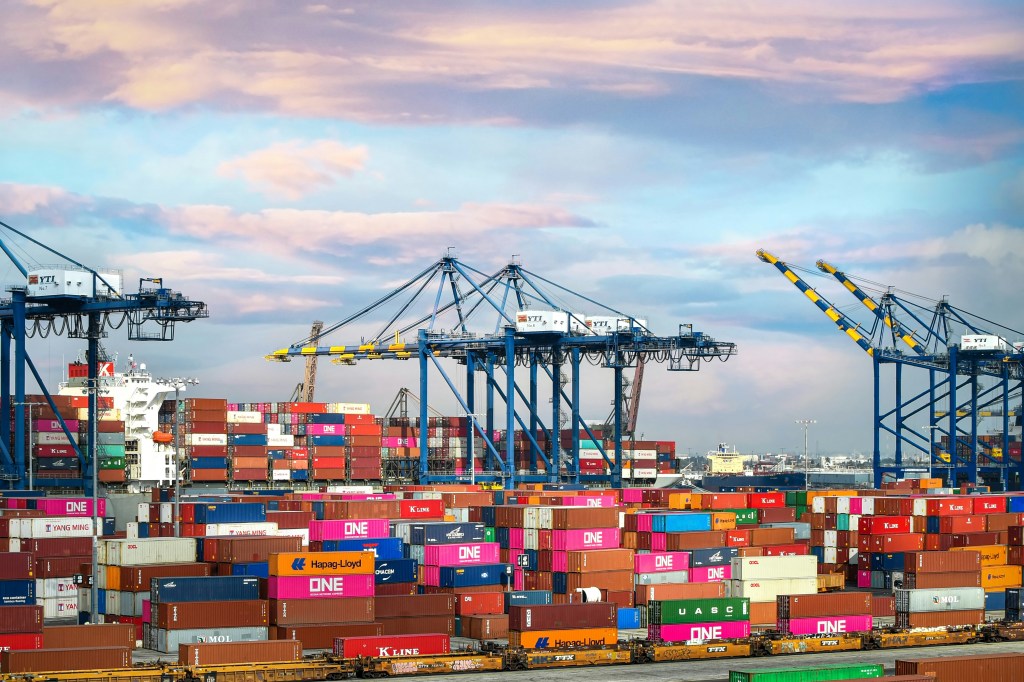
Southeast Asia (SEA) presents one of the most logistically complex operating environments globally. The Association of Southeast Asian Nations (ASEAN) economic bloc spans diverse geographies, encompassing major archipelagic nations like Indonesia (over 17,000 islands) and the Philippines (over 7,000 islands), dense urban metropolises, mountainous terrestrial borders across the Greater Mekong Subregion, and high-volume maritime choke points such as the Strait of Malacca11.
Logistics in Southeast Asia requires constant switching between transport modes—ocean barges, inter-island feeder vessels, long-haul trucking, narrow-gauge rail, and last-mile motorcycle couriers11. The region’s transport network relies heavily on road freight13. While ASEAN total road length doubled to nearly 2.5 million kilometers over the past decade, road quality and maintenance have not kept pace13. Secondary and rural roads, particularly in outer island provinces of Indonesia, Mindanao in the Philippines, and remote areas of Vietnam, Cambodia, and Laos, suffer from structural underinvestment11.
Multi-modal transitions in this environment are plagued by operational friction. Transferring freight from ocean liners to domestic inter-island vessels involves disparate port management protocols, varying customs standards, and unpredictable dwell times13. Furthermore, national cabotage laws—which restrict foreign-flagged vessels from transporting goods domestic port-to-port—force frequent cargo discharge and reload cycles, increasing double-handling costs and risks of cargo damage or loss13.
The structural reliance on road transportation exposes Southeast Asian logistics to global energy market shocks13. Geopolitical disruptions, such as international maritime crises in the Strait of Hormuz, trigger immediate volatility in crude oil prices13. Because Southeast Asian economies maintain varying levels of fuel subsidies, sudden international oil spikes either balloon national subsidy budgets or pass directly to fleet operators in the form of sudden fuel surcharges13. Higher diesel prices hit road-dependent transport networks severely, increasing freight rates across domestic distribution corridors13.
Concurrently, the global “China Plus One” strategic realignment has driven billions of dollars in foreign direct investment (FDI) into Southeast Asia, with manufacturing investments representing over 50% of incoming FDI flows in 202413. While this structural industrial shift boosts regional economic growth, it severely taxes Southeast Asia’s existing freight infrastructure13. Ports in Vietnam, Thailand, and Malaysia experience localized congestion, container yard space deficits, and equipment shortages13. The influx of raw materials and exported finished goods creates localized bottlenecks that static routing algorithms cannot resolve.
To operate effectively in Southeast Asia, logistics providers are transitioning from rigid tracking software to adaptive agentic systems2. Modern multi-agent frameworks continuously ingest heterogeneous, multi-modal data streams to navigate real-world regional volatility1. Shippers are actively consolidating their logistics partnerships based on technological capability: 74% of shippers report they are likely to switch Third-Party Logistics (3PL) providers based on the provider’s advanced AI capabilities2.
Rather than relying purely on historical lead-time averages, agentic AI integrates live context into routing decisions2. Predictive environmental analytics tools, such as WeatherNext, process atmospheric data to predict tropical typhoons and monsoon pathing days before landfall, enabling autonomous freight re-routing prior to port closures2. Real-time mapping traffic metrics and search trend indicators are integrated to anticipate localized demand spikes or urban road closures2. Crucially, agentic platforms digitize the unwritten, tacit knowledge of local operational staff—such as local port customs delay patterns, informal truck queue times at specific border posts, or regional dock loading quirks—converting siloed human experience into enterprise-wide institutional intelligence2.
| Operational Challenge | Root Cause in Southeast Asia | Impact on Traditional Logistics | Agentic AI System Intervention |
| Archipelagic Fragmentation | Thousands of islands requiring sea-land modal shifts11. | High dwell times and lost visibility during transfers13. | Dynamic multi-modal schedule synchronization via unified APIs2. |
| Infrastructure Deficits | Poor road quality and unpaved secondary networks13. | High vehicle wear, transit delays, and fuel waste13. | Predictive route selection prioritizing road quality telemetry2. |
| Cabotage Restrictions | National laws prohibiting foreign domestic shipping13. | Mandatory cargo discharge and feeder re-booking13. | Autonomous local carrier matching and spot booking1. |
| Geopolitical Fuel Shocks | Hormuz crude spikes affecting diesel costs13. | Uncontrolled freight rate surcharges and margin erosion13. | Real-time carrier mix optimization based on total fuel exposure2. |
| Customs & Regulatory Divergence | Varied cross-border rules across ASEAN nations14. | Extended land-border clearance times and fines15. | Autonomous document generation and pre-filing via NLP tools1. |
Cold Chain Optimization in Tropical Climates: Resolving the Transport-Storage Disconnect
The cold chain sector in Southeast Asia represents both a major economic opportunity and a persistent operational challenge. The ASEAN cold chain logistics market, valued at $18.81 billion in 2025, is projected to reach $24.43 billion by 203112. Growth is propelled by expanding urban middle-class demand for perishable food, aquatic and agricultural exports, and a rapid expansion in telemedicine ($460 million to $1.2 billion) and online grocery platforms ($350 billion market size)11.
A critical systemic mismatch exists in the allocation of infrastructure capital across Southeast Asian cold chains17. Driven by regional connectivity plans like the Master Plan on ASEAN Connectivity (MPAC 2025), massive capital investments are directed into fixed storage assets near major port nodes15. Refrigerated storage currently accounts for nearly half (49.3%) of all ASEAN cold chain logistics revenue12.
However, field diagnostics indicate that over 80% of thermal excursions and product spoilage do not occur inside static cold storage warehouses or during high-seas shipping17. Instead, thermal failure clusters during short, transitional handover windows: trailer door openings at loading docks, queue delays outside facilities in ambient tropical temperatures exceeding 30°C to 35°C, transit through shared commercial lifts, and uncalibrated multi-stop urban delivery routes17. In high-humidity tropical climates, a transport unit spending just ten minutes on an exposed dock can exceed its entire thermal allowance, breaching regulatory compliance (such as Singapore’s mandate restricting chilled food from spending more than two cumulative hours between 5°C and 60°C)17.
Globally, inadequate cold chain management causes over 526 million tonnes of food loss annually, primarily occurring during transport handovers17. In Southeast Asia, the operational dynamics of cold transport present unique technical risks, particularly for high-value biopharmaceuticals and vaccines11.
A counterintuitive finding in tropical cold chain operations is that pharmaceutical cargo damage frequently stems from over-cooling rather than under-cooling17. When reefer transport units are loaded in extreme ambient heat, automated refrigeration units often over-correct, blasting freezing air into the container compartment to quickly pull down internal temperatures17. Without real-time, cargo-level calibration, this aggressive cooling drops the compartment temperature below 0°C17. Global vaccine monitoring evaluations indicate that between 75% and 100% of temperature-monitored vaccine shipments were unintentionally exposed to damaging freezing temperatures during transport due to system over-correction17.
Furthermore, workforce shortages exacerbate these physical risks. The technical skills required to maintain and calibrate complex refrigeration equipment are scarce across ASEAN; for example, Thailand has only 420 technicians nationwide certified for Category II ammonia refrigeration systems17.
| Cold Chain Stage | Primary Operational Failure Mechanism | Conventional Monitoring | Agentic AI Orchestration & Remediation |
| Warehouse-to-Truck Handover | Rapid heat exposure during loading dock door openings in 30°C+ ambient heat17. | Manual temperature logging at departure time17. | Enforces automated contractual handover windows; delays loading if dock bay thermal sensors exceed thresholds17. |
| In-Transit Transport | Refrigeration unit over-correction leading to accidental cargo freezing17. | Single-sensor internal ambient air tracking11. | Dynamic closed-loop reefer modulation calibrated against real-time multi-point cargo temperature sensors17. |
| Multi-Stop Urban Last-Mile | Cumulative dwell time violations caused by repetitive door openings17. | Static route optimization based purely on time/distance17. | Calculates dynamic “cumulative thermal dwell budgets” per route, re-sequencing drops based on thermal decay17. |
| Equipment Maintenance | Unscheduled compressor failures during peak tropical heat conditions17. | Periodic, calendar-based manual servicing schedule17. | Continuous thermal imaging and IoT anomaly detection, trimming inventory holding costs by up to 55%17. |
End-to-End Operational Scenario: Autonomous Exception Resolution in Action
To understand how agentic logistics functions in real-world environments, consider a multi-modal shipping scenario in Southeast Asia involving high-value, temperature-sensitive biopharmaceuticals and fresh food exports. A multi-national healthcare and agricultural distributor is shipping a high-value cargo container comprising $1.2 million in temperature-sensitive vaccines (requiring strict 2°C to 8°C controls) and premium tropical produce from a processing hub in East Java, Indonesia, to a medical distribution network in Metro Manila, Philippines. The baseline schedule calls for truck transport from East Java to Tanjung Perak Port in Surabaya, feeder ship passage through the Java Sea to Singapore for transshipment, ocean transit to the Port of Manila, and final-mile refrigerated truck delivery to regional distribution centers.
Three days into transit, while the container is aboard a feeder vessel approaching Singapore, a tropical super-typhoon suddenly shifts trajectory, sweeping into the Luzon Strait. The Port of Manila issues an early warning announcement that container terminal operations will shut down within 36 hours, anticipating severe storm surges and prolonged power grid instability. Simultaneously, real-time IoT sensors inside the container register an anomaly: external ambient humidity on the vessel deck has spiked to 95%, and the container’s primary refrigeration unit exhibits a subtle current fluctuation, indicating potential compressor coil strain.
Under legacy operations, this scenario would trigger static alert emails to a dispatcher’s inbox. The dispatcher would manually attempt to call regional port agents in Singapore and Manila, negotiate with feeder lines during off-hours, and manually search for alternative port slots—a process taking 24 to 48 hours. By the time human action is taken, the container would be stuck on an anchored vessel outside Manila in typhoon conditions, leading to reefer power loss, total cargo spoilage, and massive supply chain downtime.
Instead, the enterprise’s Logistics Main Persona Agent automatically initiates an emergency exception resolution loop, deploying specialized sub-agents3.
First, the Tracking and Meteorological Sub-Agent queries predictive weather models (such as WeatherNext) to calculate the exact window before sea lanes close2. It determines that the vessel cannot reach Manila before terminal shutdown2.
Concurrently, the Cold Chain Telemetry Sub-Agent ingests live sensor data from the container. It runs a thermal degradation algorithm, calculating that under current battery backup levels and ambient conditions, the cargo has a maximum cumulative dwell budget of 14 hours before internal temperatures exceed the critical 8°C threshold17.
Next, the Customs and Regulatory Sub-Agent evaluates alternative entry ports in the Philippines, identifying the Port of Batangas (south of Manila) as fully operational and outside the primary storm strike vector. The sub-agent immediately accesses the Philippine Bureau of Customs electronic portal via standardized APIs, drafting and submitting pre-arrival customs amendments to prevent import holding delays upon arrival3.
Simultaneously, the Procurement and Sourcing Sub-Agent queries regional logistics platforms via the Model Context Protocol (MCP)18. It identifies an available berth on a fast-feeder vessel departing Singapore for Batangas, automatically negotiates spot freight rates, and executes the re-booking transaction1. Simultaneously, it issues a dispatch purchase order to a pre-vetted regional refrigerated trucking fleet in Batangas, scheduling a priority pickup equipped with battery-backed cooling systems3.
Within 15 minutes of the typhoon trajectory update, the Main Persona Agent compiles the complete resolution plan into a structured natural language digest for the Chief Supply Chain Officer2. The system presents a human-in-the-loop (HITL) approval prompt detailing the execution cost ($4,200 in spot rerouting and customs amendment fees) versus the calculated risk cost ($1.2 million in total cargo loss plus $350,000 in contractual late delivery penalties)3.
Upon a single human authorization click, the agent updates the enterprise ERP and TMS, notifies the receiving medical centers in Manila of the revised delivery ETA (delayed by only 6 hours instead of 5 days), and transmits digital bill of lading documentation directly to the new port authority2. The cargo is diverted smoothly, bypasses port congestion, maintains perfect 4.1°C thermal stability throughout transit, and avoids total loss2.
| Operational Event Phase | Elapsed Time | Action Taken by Agentic Architecture | System Metrics & Financial Impact |
| 1. Disruption Detection | T+00:00 | WeatherNext API flags typhoon trajectory; reefer sensor logs power spike2. | Port closure predicted 36 hours ahead of official terminal notice2. |
| 2. Scenario Modeling | T+00:02 | Sub-agents evaluate Manila port arrival vs alternative regional ports3. | Identifies 14-hour max battery dwell budget before thermal failure17. |
| 3. Regulatory Action | T+00:08 | Customs Sub-Agent drafts Batangas pre-arrival filings via MCP API3. | Eliminates estimated 24-hour import border holding delay3. |
| 4. Procurement Execution | T+00:12 | Sourcing Agent books feeder spot slot to Batangas and dispatches reefer truck1. | Spot expenditure: $4,200 vs Cargo Risk Value: $1.25 million3. |
| 5. Human Authorization | T+00:15 | CSCO approves digested resolution plan via single-click dashboard3. | Exception resolution time cut from 36 hours to 15 minutes5. |
| 6. Final Delivery | T+36:00 | Vessel berths at Batangas; priority EV reefer truck completes Manila delivery2. | Cargo delivered at 4.1°C; total schedule delay limited to 6 hours17. |
Next-Generation AI Architectures, Protocols, and Security Frameworks
The technological foundations of agentic logistics are evolving rapidly from basic model API calls toward multi-agent coordination frameworks and standardized integration protocols3. Modern agentic deployments avoid monolithic AI models3. Single, large models suffer from latency bottlenecks, high token costs, and context window degradation when forced to process massive, heterogeneous supply chain datasets2. Enterprise deployment architectures employ hierarchical multi-agent structures3.
A focused Main Persona Agent (such as a Logistics Orchestrator) acts as the central interface and domain gatekeeper3. Positioned beneath the main agent are specialized sub-agent teams—including model-based, goal-based, and reinforcement learning agents—each dedicated to specific micro-domains like demand forecasting, customs document parsing, or fleet telemetry tracking1.
To connect these agents to enterprise systems without creating custom integration pipelines for every database, the industry has widely adopted the Model Context Protocol (MCP)18. Introduced as an open standard, MCP functions as the universal interface (“the USB-C for AI applications”) between AI reasoning engines and external software ecosystems18. MCP abstracts data retrieval, database querying, and tool execution, allowing agents to query ERP systems, extract shipping logs, process Document AI fields, and trigger API calls seamlessly across legacy enterprise environments2.
To deploy agentic frameworks securely and reliably, enterprise platforms utilize a three-tiered infrastructure architecture5:
- Tier 1 (Unified Context Engine): Fuses structured (ERP, WMS, databases), semi-structured (logs, APIs), and unstructured (PDF manifests, emails) data alongside external signals (weather, port telemetry) into a single semantic layer5.
- Tier 2 (Semantic Governor): Encodes deterministic business logic, approval hierarchies, and compliance thresholds into the decision loop to enforce strict policy adherence and prevent probabilistic hallucinations5.
- Tier 3 (Active Orchestrator): Executes multi-step workflows across systems, leveraging dynamic thresholds for autonomous execution (e.g., low-value re-routing executed automatically, while high-stakes decisions escalate to human leads)5.
While unit token costs continue to decrease, the Total Cost of Ownership (TCO) for enterprise agentic platforms remains heavily weighted toward infrastructure6. For a Fortune 500 enterprise running production-grade AI agents, the median direct LLM API cost is approximately $8,400 per month per active agent6. However, direct token consumption accounts for only 38% of total operating spend6. The remaining 62% of enterprise infrastructure TCO is consumed by observability tools for logging reasoning steps, multi-agent orchestration middleware, vector databases, MCP server connectivity, and governance guardrails5.
As AI agents transition from passive advisors to autonomous executors capable of initiating financial transactions and altering logistics contracts, they introduce new security vectors6. Security failures constitute the primary blocker for enterprise deployment, accounting for 67% of failed pilot projects6.
Securing agentic supply chains requires deploying identity-centric security architectures21. Key mitigation measures include enforcing least-privilege API scoping to restrict sub-agents to strict, immutable tool permissions; deploying indirect prompt injection filters to sanitize data inputs from external unstructured documents (such as PDF manifests or supplier email updates) before ingestion into the agent’s core reasoning context; and establishing Human-on-the-Loop (HoTL) financial and operational thresholds where actions exceeding pre-set monetary values automatically lock execution pending human authorization5.
| Threat Vector | Mechanism in Supply Chain Workflows | Risk Impact | Strategic Mitigation Standard |
| Indirect Prompt Injection | Adversaries embed malicious prompt text inside bill-of-lading PDFs or supplier notes to override agent instructions22. | High: Unauthorized re-routing, cargo theft, or financial fraud22. | Strict input sanitization pipelines; isolation of document parsing models from execution agents2. |
| Context Poisoning | External data sources (e.g., corrupt traffic APIs or forged IoT sensor feeds) feed false state data into the agent11. | Medium-High: Disruption of regional fleet schedules and stockouts1. | Cross-datasource verification; anomaly detection on external context feeds before ingestion22. |
| Tool Misuse & Excessive Scope | Agent leverages broad database write permissions to execute unauthorized carrier contract updates22. | High: Compliance breach and systemic financial losses6. | OAuth scope restriction; zero-trust agent service accounts with short-lived tokens21. |
| Supply Chain Data Poisoning | Upstream fine-tuning datasets are compromised with biased carrier selection or hidden backdoors23. | Medium: Systematic manipulation of procurement decisions1. | Model integrity checks; continuous audit logging of multi-agent reasoning chains5. |
Decarbonization and Physical Fleet Constraints: Energy Density and Modal Realities
As supply chain organizations face increasing pressure to meet sustainability mandates and ESG reporting standards, integrating green transport assets has become a priority9. However, fleet electrification faces fundamental physical and chemical constraints when scaling beyond light-duty urban transport19.
The primary technical barrier to electrifying heavy transport is the gravimetric energy density gap between chemical fossil fuels and electrochemical storage24. Conventional Jet A-1 fuel holds approximately 12.0 kWh/kg of specific energy, diesel fuel provides roughly 10.0 kWh/kg, and gasoline contains 9.0 kWh/kg24. In stark contrast, state-of-the-art commercial lithium-ion batteries achieve an energy density of approximately 0.25 kWh/kg24. Hydrocarbon fuels hold approximately 40 to 50 times more energy per kilogram than current lithium-ion batteries24. While electric powertrains exhibit high tank-to-wheel efficiency (converting over 80% of electrical energy to shaft power compared to 30% to 40% efficiency in internal combustion engines), this efficiency advantage is heavily offset by the sheer mass of the battery pack required for heavy payload transport over long distances19.
This physical reality dictates vastly different decarbonization pathways across transport modes24:
- Urban Last-Mile Delivery: Battery Electric Vehicles (BEVs) are fully viable for light delivery vans and urban short-haul routes where daily range requirements are modest and frequent stopping allows regenerative braking recovery19.
- Heavy-Duty Long-Haul Trucking: Replacing a Class 8 diesel truck’s fuel system with a lithium-ion battery pack creates a severe payload penalty24. To achieve long distances under full load, an electric truck requires a battery weighing several tons24. Because highway regulations enforce strict maximum gross vehicle weight limits, battery mass directly subtracts from allowable cargo payload, eroding commercial viability24. Consequently, heavy-duty long-haul freight relies on alternative low-carbon fuels like biomethane, hydrogen fuel cells, or catenary hybrid systems24.
- Maritime Shipping: Ocean transport involves massive cargo tonnage moved across trans-oceanic distances without refueling options24. The volumetric and gravimetric energy density limits of batteries completely rule out battery-electric propulsion for ocean container ships24. Storing sufficient electrical energy in batteries to push a container ship across the ocean would require a battery pack larger than the vessel’s actual cargo capacity24. Maritime decarbonization focuses on energy-dense liquid fuels that utilize existing hull configurations—specifically green methanol, synthetic e-fuels, and ammonia24.
- Commercial Aviation: Aviation represents the most weight-constrained transport domain24. Aircraft performance is strictly dictated by the thrust-to-weight ratio and the weight-drag cycle29. Unlike conventional jet aircraft, which burn fuel and become lighter as the flight progresses (reducing cruise drag and fuel burn), battery-electric aircraft maintain constant mass throughout the flight29. Adding batteries increases aircraft weight, requiring more aerodynamic lift, which creates additional drag and demands even more energy—a diminishing returns loop that limits electric flight to ultra-short commuter routes24. Commercial aviation depends almost entirely on drop-in Sustainable Aviation Fuels (SAF)—including bio-derived jet fuels ($1.80 per liter vs $0.49 per liter for conventional jet fuel) and Power-to-Liquid (PtL) synthetic hydrocarbons—that match the high specific energy (~12 kWh/kg) of Jet A-1 fuel24.
| Transport Sector | Dominant Alternative Energy Carrier | Key Technical / Economic Barrier | Commercial Scalability Horizon |
| Urban Last-Mile | Direct Battery Electric (BEV)19 | Grid charging infrastructure capacity and fleet capital cost19. | High Maturity / Immediate Scaling19 |
| Heavy Long-Haul Haulage | Hydrogen Fuel Cells / Biomethane / Advanced BEV24 | Reduced payload capacity due to battery weight; missing hydrogen refueling stations24. | Medium Horizon (2028–2035)24 |
| Maritime Shipping | Green Methanol / Ammonia / Synthetic E-Fuels24 | High production cost of e-fuels and low well-to-tank efficiency; fuel toxicity handling27. | Mid-to-Long Horizon (2030+)24 |
| Commercial Aviation | Drop-in Sustainable Aviation Fuel (SAF) / PtL24 | High cost ($1.80/L for bio-SAF vs $0.49/L for conventional jet fuel); feedstock availability27. | Long Horizon for 100% adoption24 |
Given these hard physical limitations on hardware and battery chemistry, agentic AI serves as a critical software-driven energy productivity multiplier9. Rather than relying solely on battery technology breakthroughs to lower carbon emissions, logistics providers deploy agentic models to optimize fleet energy efficiency across existing operational constraints2.
Empirical evaluation of sustainable AI supply chain frameworks (such as the SustAI-SCM architecture) demonstrates that transformer-based agentic optimization achieves substantial sustainability gains without requiring total fleet replacement9. Deploying agentic optimization achieves a 28.4% reduction in overall operating costs through dynamic load consolidation and route optimization9. Furthermore, these architectures deliver a 30.3% reduction in total carbon footprint by minimizing empty return trips (deadheading), optimizing vessel speed schedules, and enforcing multi-modal shifts to lower-emission transit modes9. At the node level, warehouse operational throughput and dock utilization improve by 21.8%, cutting engine idling times at logistics facilities9. By continuously balancing trade-offs between delivery lead times, fuel consumption curves, charging schedules, and alternative fuel costs, agentic systems maximize the operational efficiency of both zero-emission and legacy combustion fleets9.
Strategic Recommendations for Enterprise Logistics Leaders
The deployment of agentic AI in supply chain management represents an architectural shift from manual human exception management to semi-autonomous operational systems2. In complex, geography-constrained environments such as Southeast Asia, agentic logistics offers a viable mechanism to overcome infrastructure gaps, manage thermal disruptions across tropical cold chains, and build resilience against geopolitical energy shocks2.
To maximize value from agentic AI investments while mitigating structural security and operational risks, enterprise leadership should pursue the following strategic actions:
First, executive leadership must re-align investment KPIs around Level 5 Analytics Maturity and Outcome Velocity, transitioning financial evaluation models away from simple headcount reduction toward cycle-time compression and operational elasticity5. Establishing baseline operational metrics prior to pilot deployment is critical to accurately track value realization along the implementation maturity curve6.
Second, organizations should standardize system connectivity via the Model Context Protocol (MCP) to abstract data access across ERP, TMS, WMS, and IoT sensor networks18. Standardized integration eliminates custom engineering overhead and ensures sub-agents operate on verified, real-time enterprise context5.
Third, cold chain operations in tropical environments must re-prioritize capital allocation, redirecting resources to address high-risk transitional transport handovers rather than focusing solely on fixed warehousing17. Logistics providers should deploy agentic systems that dynamically track cumulative thermal dwell budgets, enforce contractual dock loading windows, and prevent cargo freezing caused by aggressive refrigeration over-correction17.
Fourth, enterprise IT teams must establish zero-trust identity architectures and Semantic Governor controls prior to production rollout5. Securing agentic operations requires enforcing least-privilege tool access, sanitizing external multi-modal inputs against prompt injection, and setting human-on-the-loop authorization thresholds for high-value financial or contractual actions5.
Finally, sustainability strategies must account for physical energy density constraints in heavy transport24. Logistics leaders should leverage agentic software optimization as an immediate energy productivity multiplier—reducing emissions through dynamic load matching, deadhead elimination, and speed optimization—while strategically phasing in alternative low-carbon energy carriers like biomethane, green methanol, and Sustainable Aviation Fuels9.
Works cited
- Agentic AI in Supply Chain & Logistics Market Size | CAGR of 17.5%., https://evolvancemarketresearch.com/reports/agentic-ai-in-supply-chain-and-logistics-market/
- https://cloud.google.com/transform/how-agentic-ai-is-rewriting-the-rules-for-logistics-providers
- https://aws.amazon.com/blogs/industries/transform-supply-chain-logistics-with-agentic-ai/
- What is Agentic AI? – IBM, https://www.ibm.com/think/topics/agentic-ai
- Agentic AI Frameworks Guide 2026 | Enterprise Implementation – Ampcome, https://www.ampcome.com/post/agentic-ai-frameworks-guide
- Agentic AI Statistics 2026: 150+ Data Points Collection – Digital Applied, https://www.digitalapplied.com/blog/agentic-ai-statistics-2026-definitive-collection-150-data-points
- Seizing the agentic AI advantage – McKinsey, https://www.mckinsey.com/capabilities/quantumblack/our-insights/seizing-the-agentic-ai-advantage
- Agentic AI Solutions for Australian Enterprises | C9, https://www.c9.com.au/Company/Blogs/Article/From-Concept-to-AI-Agent-Building-Custom-Agentic-AI-Solutions-for-Enterprise-Workflows
- SustAI-SCM: Intelligent Supply Chain Process Automation with Agentic AI for Sustainability and Cost Efficiency – MDPI, https://www.mdpi.com/2071-1050/17/6/2453
- Full article: Agentic artificial intelligence of things (AIoT) for just-in-time (JIT) logistics and supply chain: a case of modular construction – Taylor & Francis, https://www.tandfonline.com/doi/full/10.1080/13675567.2026.2636594
- ASEAN Cold Chain Logistic Market Size and Trends 2029 | TechSci Research, https://www.techsciresearch.com/report/asean-cold-chain-logistics-market/14623.html
- ASEAN Cold Chain Logistics Market Analysis | Industry Growth, Size & Trends Report, https://www.mordorintelligence.com/industry-reports/asean-cold-chain-logistics-market
- The Logistics Ceiling: ASEAN’s Freight Infrastructure and the “China Plus One” Strategy, https://rsis.edu.sg/rsis-publication/rsis/the-logistics-ceiling-aseans-freight-infrastructure-and-the-china-plus-one-strategy/
- ASEAN Framework on: Logistics for Digital Economy Supply Chain For Rural Area, https://asean.org/wp-content/uploads/2024/04/ID_Final-Report_ASEAN-Framework-on-Logistic-for-Digital-Economy-Supply-Chain-for-Rural-Area.pdf
- Chapter 1 – Economic Research Institute for ASEAN and East Asia (ERIA), https://www.eria.org/uploads/media/5_RPR_FY2018_11_Chapter_1.pdf
- The Future of Cold Chain in Southeast Asia’s Last Mile Logistics Industry – YCP, https://ycp.com/insights/article/cold-chains-rise-in-southeast-asia-last-mile-logistics
- Cold Chain in a Tropical Climate: Where Logistics Failures Actually Happen, and What to Do About Them – TTMI Singapore, https://www.ttmi-sg.com/post/cold-chain-logistics-tropical-climate
- Systematization of Knowledge: Security and Safety in the Model Context Protocol Ecosystem, https://arxiv.org/html/2512.08290v1
- The Road Ahead: Electrification, Design and Mobility Choices for Efficient Transport – Energy Transitions Commission, https://www.energy-transitions.org/wp-content/uploads/2025/12/ETC-Road-Productivity-Report_web-file_vf-1.pdf
- What Is Agentic AI? Characteristics, Use Cases & Setup in 2026 – Atlan, https://atlan.com/know/what-is-agentic-ai/
- Top 10 Security Risks of Autonomous AI Agents, https://www.token.security/lp/top-10-security-risks-of-autonomous-ai-agents
- MCP Security: Risks, Architecture, and Best Practices – BigID, https://bigid.com/blog/mcp-security-risks-mitigation/
- Model Context Protocol Threat Modeling and Analyzing Vulnerabilities to Prompt Injection with Tool Poisoning – arXiv, https://arxiv.org/html/2603.22489v1
- (PDF) Decarbonising Ships, Planes and Trucks: An Analysis of Suitable Low-Carbon Fuels for the Maritime, Aviation and Haulage Sectors – ResearchGate, https://www.researchgate.net/publication/348679510_Decarbonising_Ships_Planes_and_Trucks_An_Analysis_of_Suitable_Low-Carbon_Fuels_for_the_Maritime_Aviation_and_Haulage_Sectors
- An Overview of Promising Alternative Fuels for Road, Rail, Air, and Inland Waterway Transport in Germany, https://juser.fz-juelich.de/record/906321/files/energies-15-01443.pdf
- Future Power Train Solutions for Long-Haul Trucks – MDPI, https://www.mdpi.com/2071-1050/13/4/2225
- Decarbonizing Aviation: Enabling Technologies for a Net-Zero Future – Clean Air Task Force, https://www.catf.us/resource/decarbonizing-aviation-enabling-technologies-net-zero-future/
- State of the Art on Alternative Fuels Transport Systems in the European Union | Sipotra, https://www.sipotra.it/wp-content/uploads/2020/07/State-of-the-Art-on-Alternative-Fuels-Transport-Systems-in-the-European-Union.pdf
- Aircraft Hybrid-Electric Propulsion: Development Trends, Challenges and Opportunities – PMC, https://pmc.ncbi.nlm.nih.gov/articles/PMC8207818/
Image source: https://unsplash.com/@barrettward

